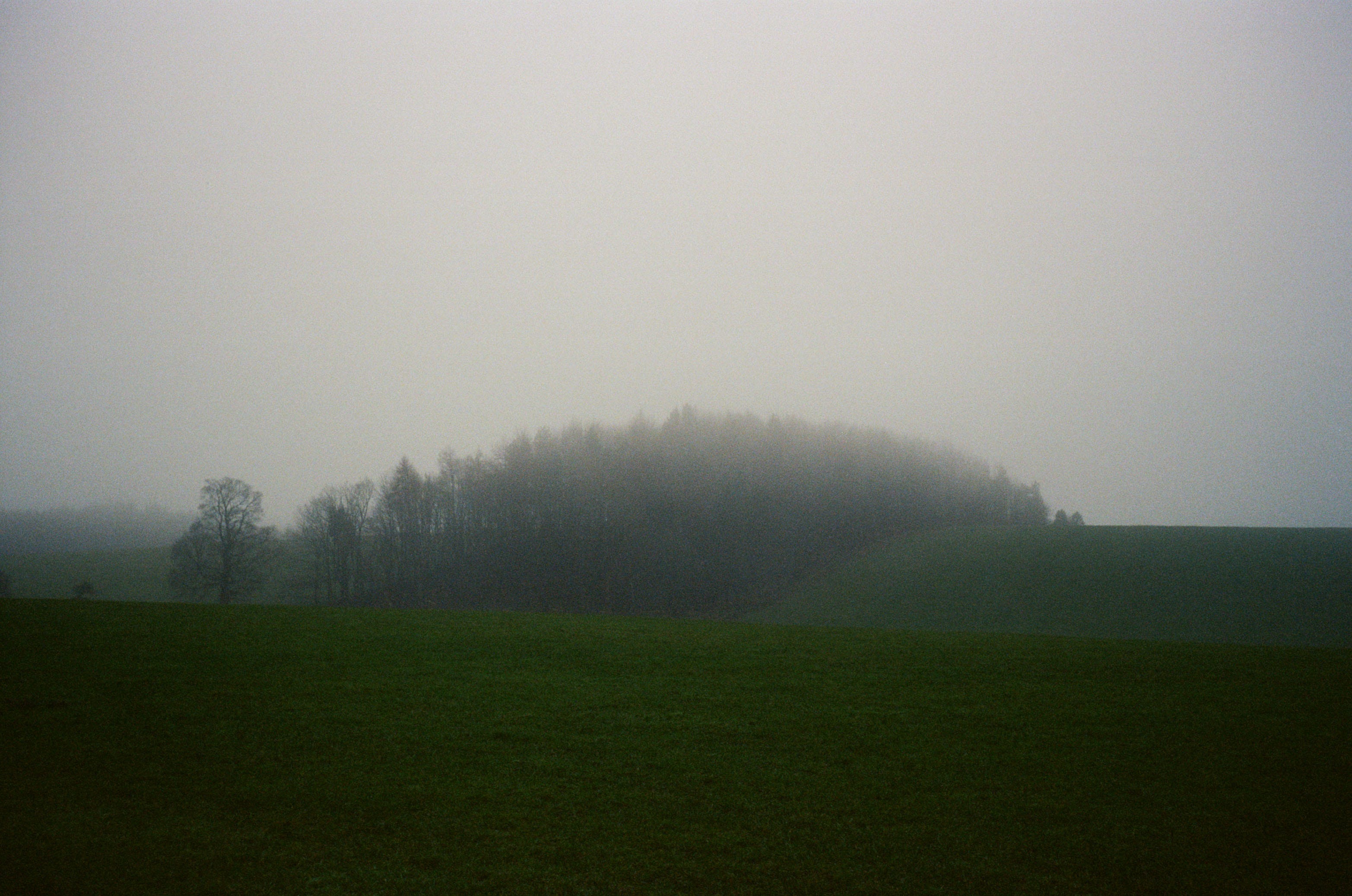
Horizons
Seeing no edge, breathing sky
Hello, hope this finds you all well. Two films about horizons this week, but I’ll start by recommending a couple of things. Three very beautiful super 8 films by my partner Blanca are now available to watch as part of Ultra Dogme’s film club; It’s a really cool project and I’m excited to see how it continues. Last month’s film was Larry Gottheim’s ‘Four Shadows’ and they threw up some really interesting texts to accompany it. It also resulted in me watching ‘Horizons’. The second recommendation is for my friend Will’s excellent NTS show Plastic Language, which has been exploring intersections between spoken word and music. The third episode airs this Wednesday at 1am UK time, and the first two can be listened to here and here.
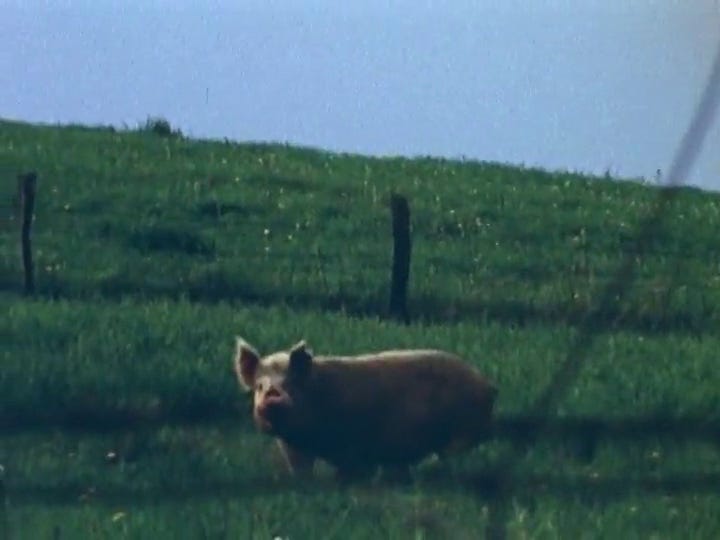
Horizons (Larry Gottheim, 1973)
A film of horizons, yes. What we define as a horizon, less clear; a dividing line of sorts, the promise of further on, a hill, a telegraph wire, the back of a cow? Much is shot hand held, often from a moving car; images are postcards, delivered eagerly one after another into your hands.
The journeying embedded in these images, through travel or repetition, the experienced or traversed horizon, results in restlessness and endlessness. No film of deserted spaces, here we have the charisma of people, animals and the editing itself; a life lived in landscapes. We know the filmmaker is there, the horse and the pig, unable to lie, tell us so. Four chapters, only indicated by the coloured inserts, abide by the seasonal cycle. Almost a diary film but for the fact that within these time is muddled, meddled with by human hands. The warmth and generosity of our companion is felt when we reach the moment when two relatively quick cuts in winter take us from a pair of children playing in the snow, to a lone snowman in the melting field sat directly between, back to the children before a snowball hits the ground.
Almost immediately we find Cezanne, endless views always seeking something different/hidden, asking us whether we can see otherwise. The horizon as naturally experienced a priori means depth to the human eye. With the photographic image we can, like Godard, ask how may we restore flatness to this depth. The filmmaker leaves us clues: the title and chapter inserts; the former the only concession to language, while the colours signify the seasons, and, like a friend's hand on the shoulder, suggest what else might be looked for. Sometimes with reward, sometimes in vain; what does it matter, we see so much already. This activation of the viewers perspective leads to both a seeing differently and a questioning of where our eyes may be drawn; the factors that are conditioning this: the mountain is also looking at me, the tyranny of the object. But domination can also be a pleasure, the viewer may be distracted from their collecting of horizons; are they dissolved in these instances?
This dynamic gets close to something that still reverberates in these images of hills, fields and people now filmed by Larry Gottheim fifty years ago. Fredric Jameson, in regard to Peter Weiss, remarks: “perhaps a true aesthetics of resistance entails [instead of a futile attempt to reconcile oppositions] finding the social position where these irreconcilables do not appear in the first place”. And so, taking liberties, can we ask what would it mean to find the perspective of the horizon where it does not appear as a horizon? Or to find the point at which the horizon between man and environment disappears? Absent from answers, the same wavering tension created by the confusion between physical and philosophical reorientation in these questions might be the most persistent horizon in Gottheim’s film.
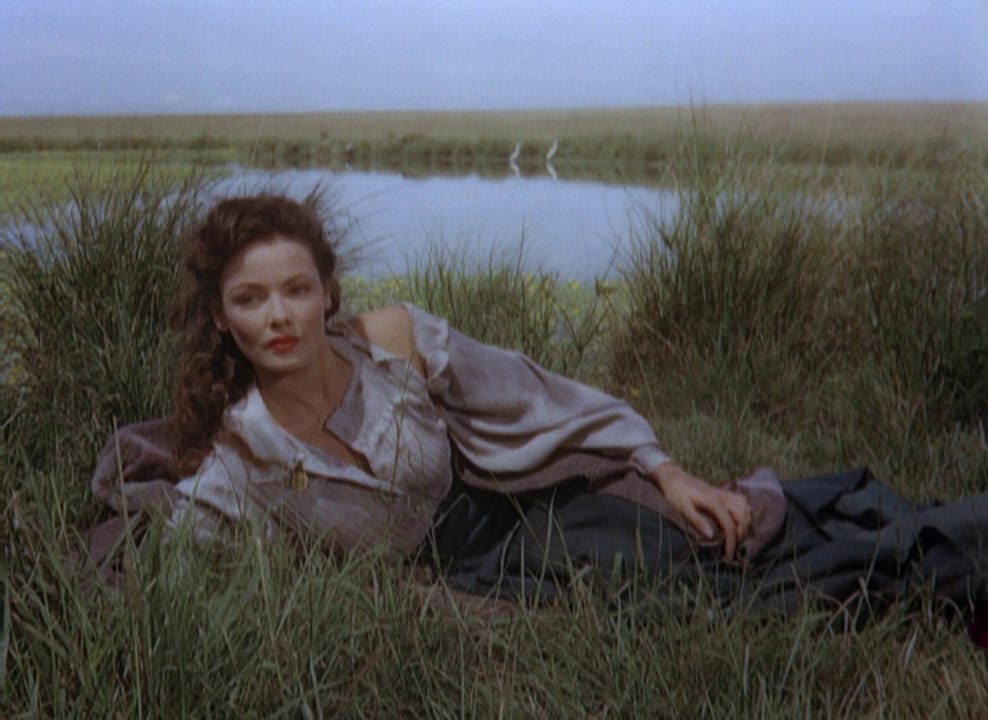
Way of a Gaucho (Jacques Tourneur, 1952)
A strange and striking film, demonstrated most strongly through use of light and landscape and particularly touching attention to fauna, as we travel across pampas, mountains, and forests. The word painterly is overused, but the effect of the softer image here on the leaves and branches is incredible. sound also used perceptively; see the pursuit through the cloisters where the choral practices produce an airiness that confronts the tightening construction of the screen space. To return to horizons, few films constantly present one so sharply defined; reflecting conceptions of independence and civilisation that contradict. The whole film hinges on one brief shot of the adoptive brother's face where he hesitates, unable to go against the torture dictated by the milita commander, demonstrates the paralysing impotence of those who try to maintain the essence of both; both familial relations and liberal beliefs must ultimately give way before the needs of authority and capital. A tragedy made all the more clear during the final turns which ring abrupt, hollow and false; resulting more from circumstance than belief. Any resistance must be voiced fully, without metaphor: the unified Gaucho’s and Indigenous peoples heave the industrialising train into the river.
Other things I have been enjoying: a film titled ‘Saving the Proof’ by Karen Holmes; She Came Through the Window to Stand by the Door by Natalia Beylis & Eimear Reidy; this image I saw while flipping through a big Paul Sharits book in the ICA the other day; Assia Djebour’s film ‘La nouba des femmes du mont Chenoua’ which I watched at the ICA just after; this latest Bobby Fingers video; and reading Balzac’s Deputy of Arcis.

All the best,
James